Free 3D Envelope Mockup Generator – Any Size
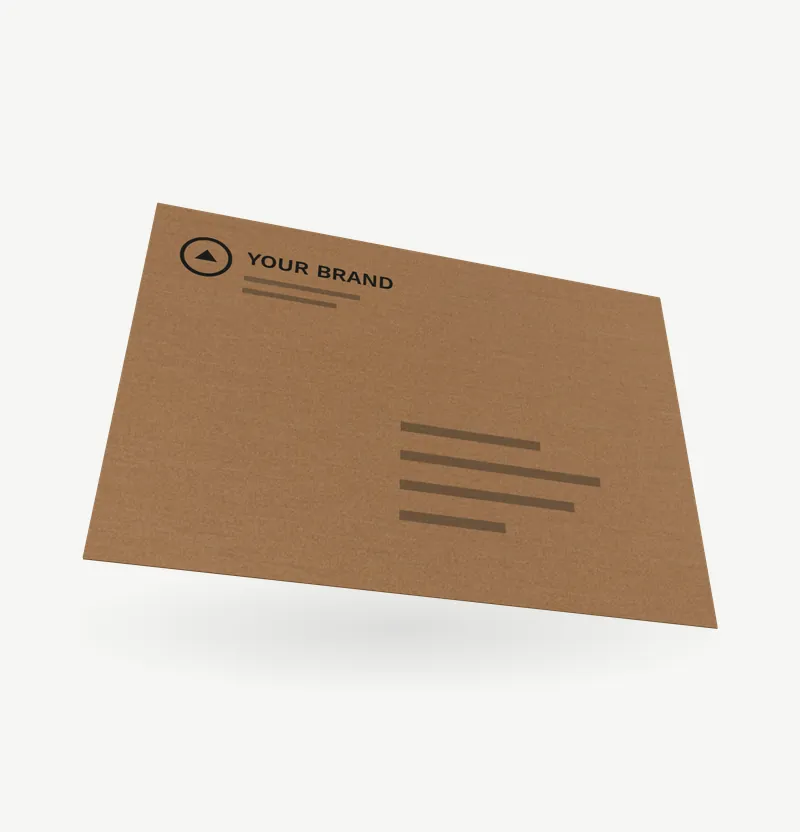
An envelope built from its width and height as a folded, glued blank, with the flap style, paper and liner you choose. Add front, back and liner artwork, turn it, open it, export.
 FreeParametric
Custom size
Any size, from the sliders
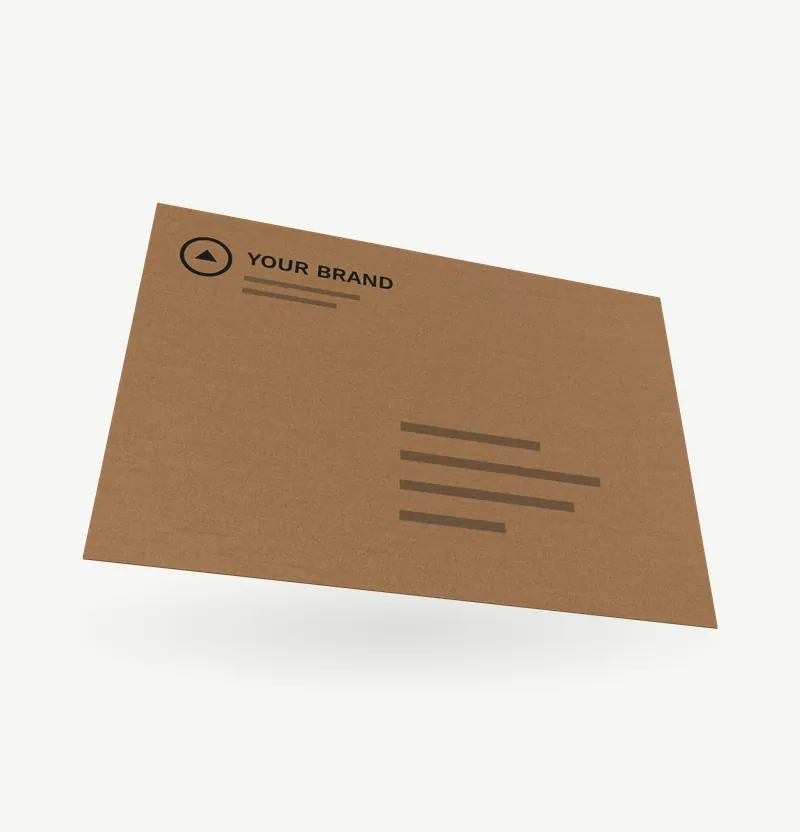 FreeParametric
C6
162 × 114 mm, kraft
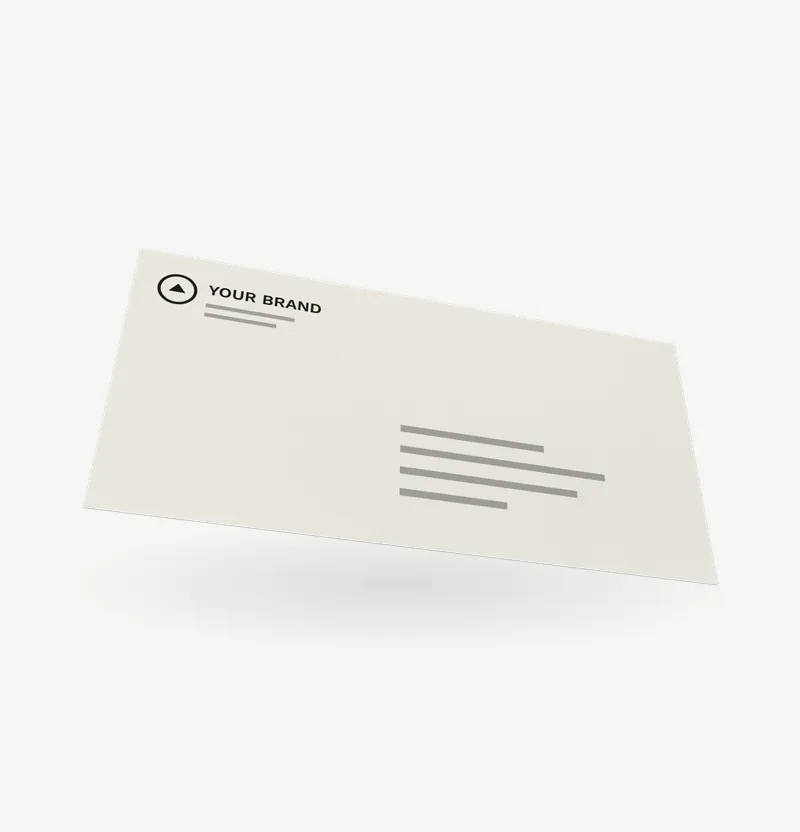 FreeParametric
DL
220 × 110 mm, white
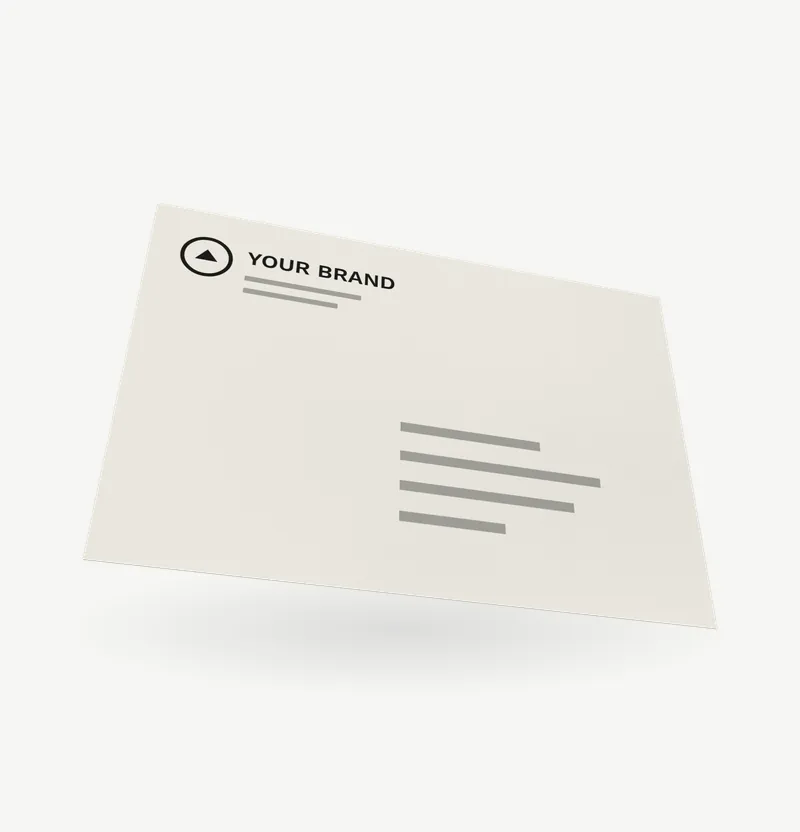 FreeParametric
C5
229 × 162 mm, white
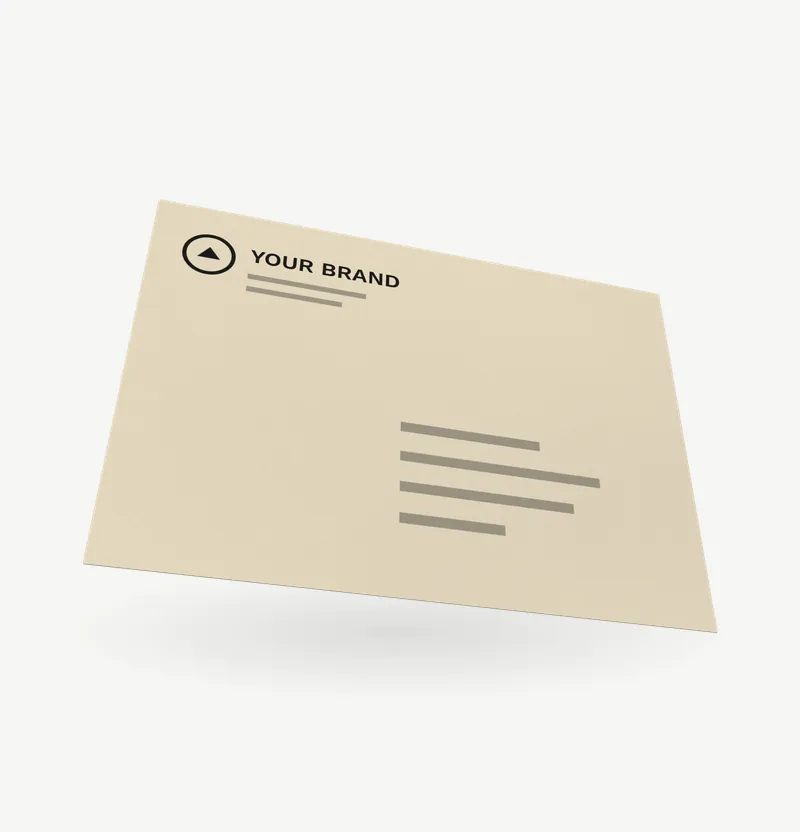 FreeParametric
A7
184 × 133 mm, lined
 FreeParametric
Square
155 × 155 mm, black, lined
About this envelope
An envelope is one die-cut sheet: a front panel and four flaps folded over and glued in a set order, the seal flap last. A pointed flap has diagonal side seams; a square flap has side seams and a straight flap. The mockup cuts and folds that blank from your size, with the seal flap 0.7 of the height and the bottom flap peaking under it, so the flaps overlap the way a real envelope's do.
Seven presets cover the European C series and the US A series; the sliders run 110–240 by 90–170 mm. Seven papers, dyed through so the inside matches, and an optional printed liner on the inside of the flap.
The back print is one image across the outside of all four flaps, as printed on the flat blank; parts hidden under another flap carry none of it.
Questions
How is the back printed across the flaps?
As one image on the flat blank; after folding, only the visible outsides of the flaps show it, which is what you see here.
Can I use my own sizes?
Yes. Each product has sliders for its main dimensions and presets for the common sizes; everything else, such as wall thickness or spine width, follows from them.
What size should my artwork be?
The Artwork panel shows each area's print size in millimetres for the current settings; prepare the file at that size, at 300 dpi if it is for print too.
More parametric mockups
Want photographic detail? Browse the catalog mockups
Fixed 3D models of real products, with colours, lighting and animation in the full editor.